COCOLAB. – offene Werkstatt (COCOLAB. – Open Workshop)
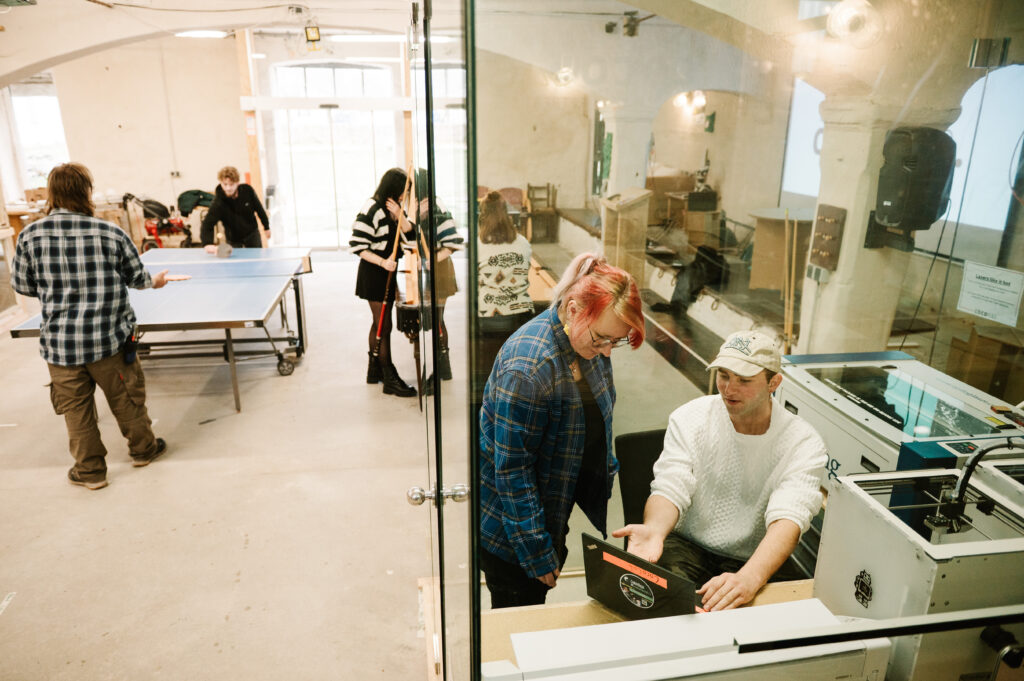
The makerspace is a creative hub for innovation in a former cowshed. The open workshop combines digital fabrication, craftsmanship, art, and sustainable technologies with coworking, residency programmes, and community events. Equipped with a CNC mill, laser cutter, 3D printers, a podcast studio, and VR technology, it’s where prototypes, design projects, and creative start-ups take shape. Collaborations with universities and cultural and research institutions make COCOLAB a lively meeting point for makers, creatives, and social entrepreneurs. The beautiful space, with its segmental-vaulted ceilings, also offers various pub sports as well as training equipment for guests on site.
Flämingo Startup Hub
At the core, Flämingo is a rural accelerator that supports early-growth start-ups and in settling in the region. The project consortium brings together coworking, co-living, and a makerspace on site, along with an international network spanning business, research, and the creative scene. Its focus areas are mobility, media and creative industries, as well as health and the bioeconomy. With mentoring, residencies, workshops, and investor access, Flämingo creates a unique environment for sustainable innovation and entrepreneurship, especially for female and international founders. The project is one of six start-up centres in Brandenburg funded by the ILB.

COCONAT
Coconat stands for “Community and Concentrated Work in Nature” and is considered the world’s first workation retreat. Since 2017, the Coconat team has combined tourism, coworking, and rural innovation. The multiple-award-winning concept offers accommodation, workspaces, seminar rooms, a makerspace, dining, as well as residencies for creatives and start-ups. As a social enterprise, Coconat promotes sustainable tourism, digital innovation, and regional networks, and is regarded across Europe as a model for future-proof tourism destinations. At the same time, Coconat sees itself as a village community house, housing the fire station (Spritzenhaus) and providing space for elections, local council meetings, and other village activities.

Der Hagelberg und die Schlacht (The Hagelberg and the Battle)
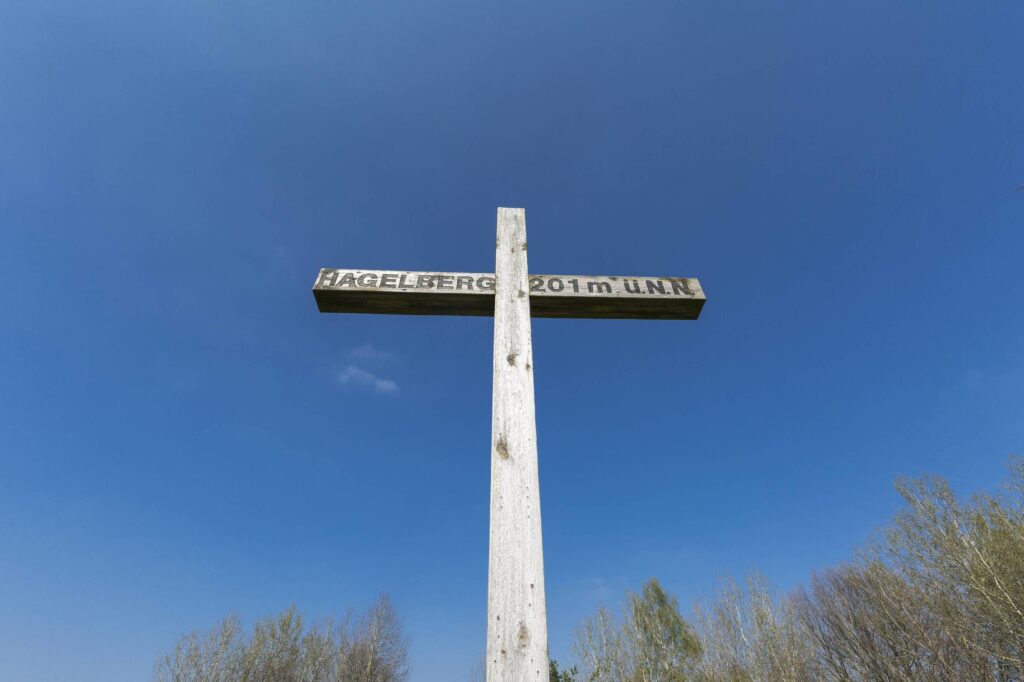
At 200.3 metres, the Hagelberg is sadly no longer Brandenburg’s highest peak according to more recent measurements, but it is still considered Germany’s smallest Mittelgebirge (low mountain range) — complete with a summit book, of course. A nationally known event was the Battle of Hagelberg, which took place in 1813 during the Wars of Liberation in the lead-up to the Battle of Leipzig. In 1849 the Borussia Monument was inaugurated in memory of the victorious Landwehr (militia), followed in 1955 by a further monument commemorating German-Russian brotherhood in arms. For a long time a mill stood on the Hagelberg, and from the Second World War onward, radio masts. In the village of Hagelberg, the first village academy of the GDR was founded in 1958.
Das Flämingdorf Klein Glien (The Fläming Village of Klein Glien)
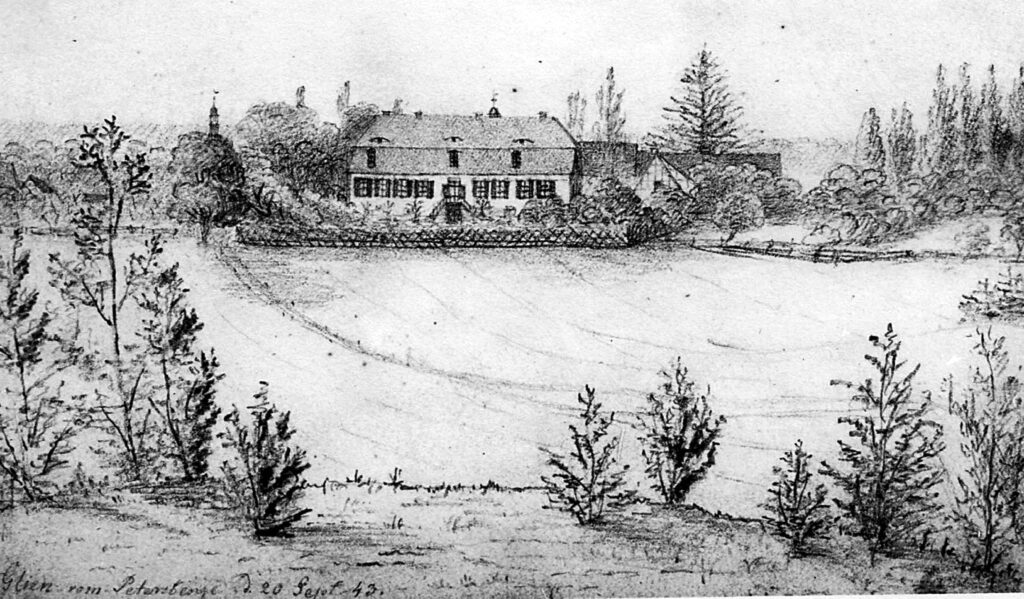
The region owes its name to the first Margrave of Brandenburg, Albrecht der Bär (Albert the Bear, 1100–1170), who settled Flemings here. Klein Glien, today part of Bad Belzig, was first documented in 1227 according to a memorial stone, making it ten years older than Berlin. The name derives from the Proto-Slavic word for clay, “glina.” Among its sights are the historic church, the former vineyard with an ice cellar, the deserted settlement of Groß Glien, and the Gasthaus Wenzel, an inn opened in 1897 at the edge of the village heading toward Bad Belzig. After the Second World War, 70 resettlers from Sorau and Bukovina came to Klein Glien and were partly integrated as new farmers.

 Share on Facebook
 Share on Twitter