Wohnprojekt Kleinst Glien (Kleinst Glien Housing Project)
Kleinst Glien is a planned, common-good-oriented housing project in the West Barn (Westscheune) and on the adjacent neighbouring plot. The plan is to create tiny houses, the “Coco Cabañas,” as well as apartments, the “LandLofts.” As part of the development, parking areas and a PV system on the barn roof are also planned. With a diverse community of residents, the project aims to enrich village life and the manor estate. Building in a way that is both ecologically sustainable and aesthetically appealing is a great concern for us. We particularly care about creating high-quality living space for disadvantaged groups as well.
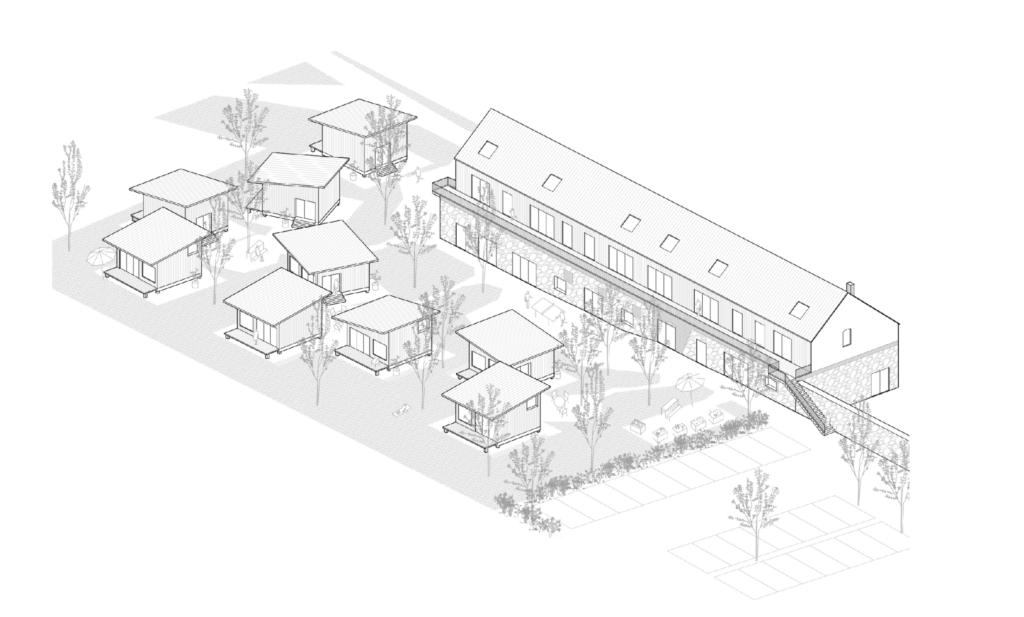
Westflügel und Founders Attic (West Wing and Founders Attic)
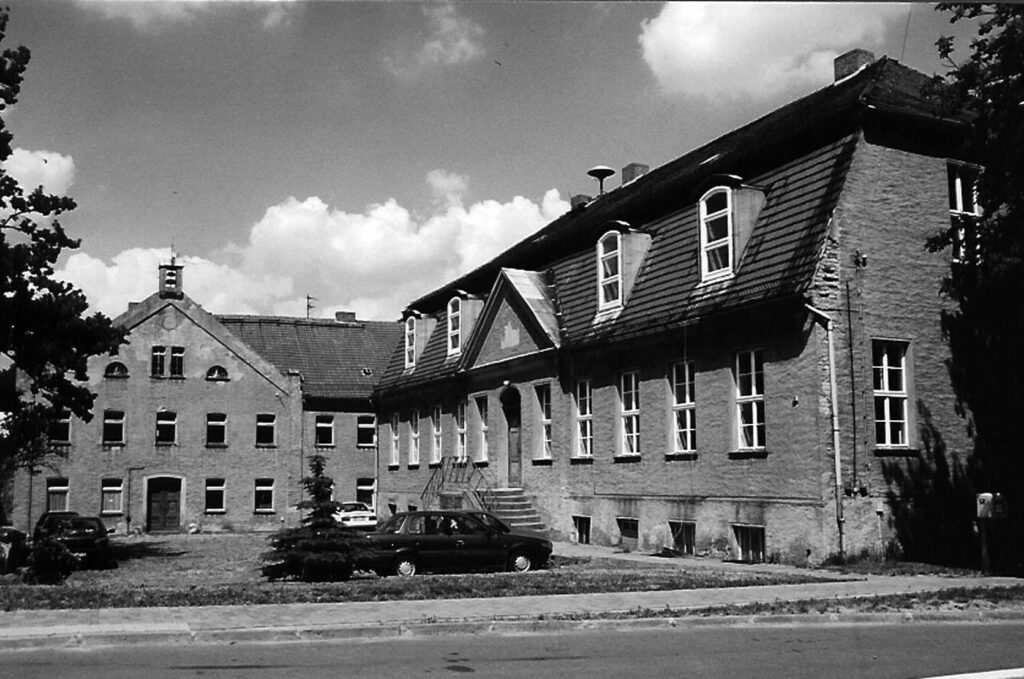
The West Wing is also referred to as the farm building (Wirtschaftsgebäude). Today it houses, alongside accommodation, “The Vault” — a beautiful event venue in the historic vaulted cellar, where concerts and markets are held regularly. In addition, the attic was converted into the “Founders Attic.” Here, innovators and founders find a place for long-term tourism and for trial living in the Fläming. The boundaries between guests and residents blur here in a special way. Historic images show that the West Wing once had further annexes; today only walled-up passageways in the cellar bear witness to them.
Gutspark (Manor Park)
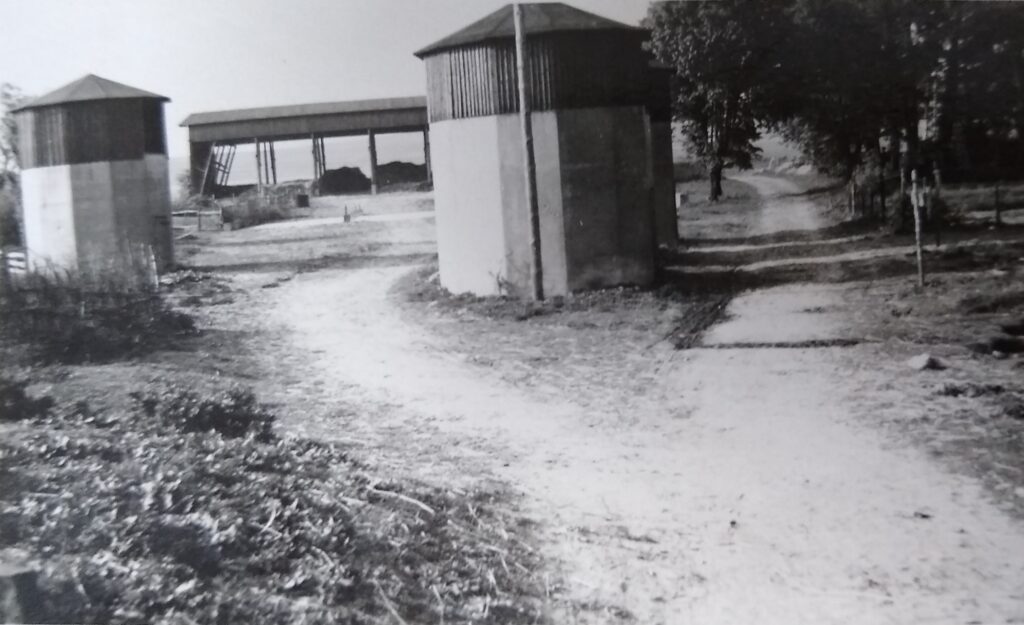
The manor park was designed in its present form by the landscape architect Lange from Bad Belzig. In many places, traces of its former agricultural use are still visible — such as the four concrete silos, whose development potential sparks the imagination of our visitors. We keep the park as natural as possible and aim to further increase its biodiversity, so that it can fulfil its role as an important habitat and refuge for animals, plants, and people. Three treehouses are also planned, in which it will be possible to work even closer to nature in the future. The orchard, with plums and apples, is home to our lovely little campsite.
Der Puhl (The Puhl)
A “Puhl,” also “Pfuhl,” refers in the Fläming dialect to a pond or marsh. The region’s former vernacular, which shows a kinship with the dialects of Flanders, is today spoken by only a few inhabitants and has survived particularly in place names — for example in Kranepuhl, eight kilometres away, meaning “crane pond.” The Puhl is fed by perched groundwater that runs through the sand along a clay layer to the lowest point. Our Puhl is an important biotope in one of the driest areas of Germany, serves as a firefighting pond, and has become legendary thanks to the winter ice-bathing challenges.
Mobilitätscampus und Mobilstation (Mobility Campus and Mobility Hub)
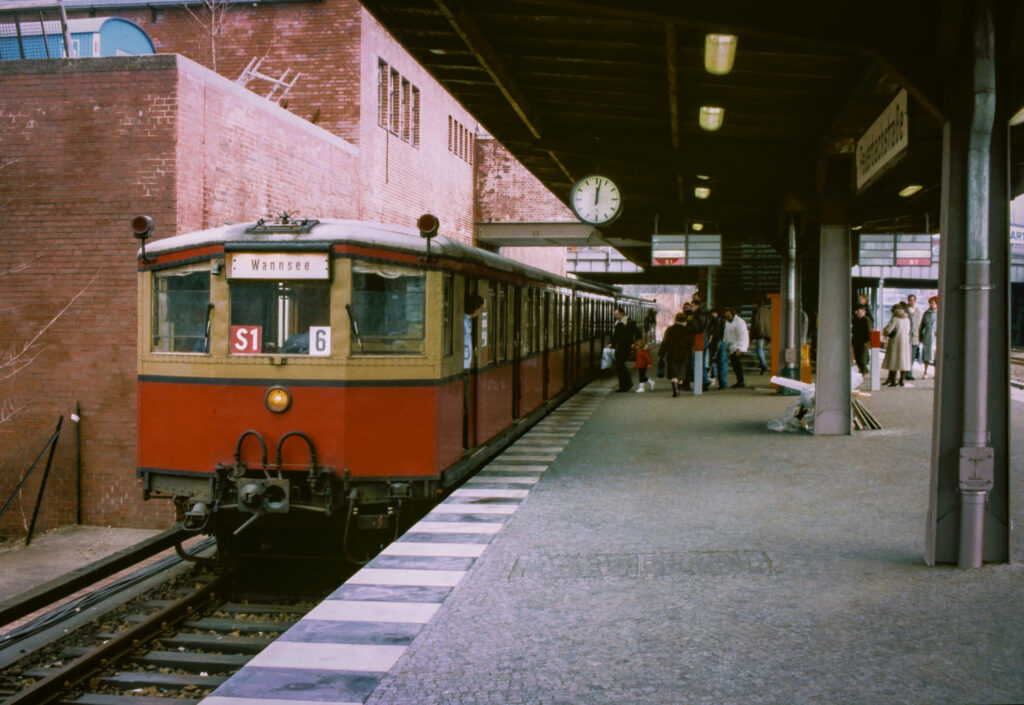
The Smart Village Mobility Campus and the Klein Glien Mobility Hub each promote sustainable mobility in rural areas in their own way. A photogenic eye-catcher is our S-Bahn trailer car 275 626, built in Görlitz in 1927, which was handed over to us in 2021 by the Historische S-Bahn e.V. association and then lovingly restored. Until 1989 it covered almost five million kilometres in Berlin (around 120 times around the world). On the Mobility Campus, start-ups, researchers, and local actors develop new ideas in hackathons and projects — such as the XR art hiking trail. The neighbouring Mobility Hub bundles concrete mobility offerings, including bicycle rental, EV charging stations, and a horse rest stop.

 Share on Facebook
 Share on Twitter